ISLAMABAD: The Government of Khyber Pakhtunkhwa has urged the federal government to ensure stronger provincial participation in the under-development Integrated Energy Plan (IEP), stressing the need to prioritise hydropower development, strengthen transmission infrastructure in the province, and establish transparent revenue-sharing mechanisms in line with the spirit of the Eighteenth Amendment to the Constitution of Pakistan.
The proposals were submitted by the Additional Secretary (Oil & Gas), Energy and Power Department of KP to the Power Division of Pakistan in response to its letter dated February 23 and following a meeting held on February 25 under the chairmanship of the federal Minister for Energy (Power Division).
In its submission, the Khyber Pakhtunkhwa Oil and Gas Company Limited (KPOGCL) recommended the inclusion of provincial nominees in the proposed IEP Secretariat and Steering Committee to ensure provincial representation in national energy planning.
The KP government also called for strict adherence to Articles 158 and 172(3) of the Constitution, along with the 18th Amendment, to safeguard provincial rights regarding royalties, windfall levies and other constitutionally guaranteed entitlements.
To ensure the smooth execution of energy projects, the province emphasised the need for enhanced security arrangements to protect infrastructure and investments. It suggested allocating resources within the IEP to strengthen security systems in KP to maintain stable project operations and boost investor confidence.
The submission highlighted that KP hosts the largest share of Pakistan’s forest resources, which could be utilised to generate carbon credits as a sustainable financing mechanism. By expanding afforestation and reforestation initiatives, the province could enhance carbon sequestration and generate verified carbon credits, with revenues reinvested into renewable energy projects, rural electrification, clean cooking solutions and energy efficiency programmes.
KP also proposed expanding the existing E4 framework by adding another “E” to explicitly incorporate expertise, education and capacity building in the country’s energy planning structure.
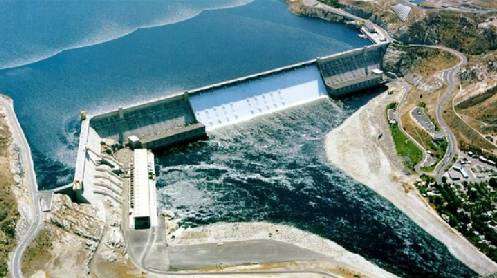
The Pakhtunkhwa Energy Development Organisation (PEDO) stressed the need to prioritise environmentally sustainable hydropower development in the province to support Pakistan’s Sustainable Development Goals (SDGs) and its commitments under the Paris Agreement Nationally Determined Contributions (NDCs) aimed at achieving long-term net-zero emission targets.
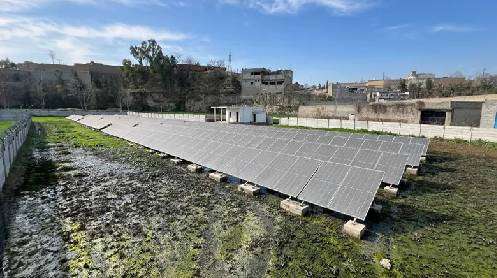
PEDO noted that KP possesses significant hydropower and solar potential along with vast forest resources and is already contributing to reducing Pakistan’s carbon footprint. It recommended incorporating mechanisms in the IEP that would allow provinces to systematically claim carbon credits and access international carbon markets.
The provincial government also called for improved alignment between national and provincial energy policies through a unified IEP framework. It emphasised the need for clearer mechanisms to synchronise national energy planning with provincial Annual Development Programmes (ADPs) to ensure effective implementation of energy projects.
Meanwhile, the Electric Inspector KP proposed formal provincial representation in federal power planning bodies operating under the Ministry of Energy (Power Division) and recommended structured consultations with provinces before finalising national generation, transmission and capacity expansion plans.
Additional proposals included prioritising run-of-river and medium-sized hydropower projects, fast-tracking approvals for provincial hydropower schemes, and establishing transparent systems for the timely payment of hydel profits and royalties through proper accounting and reconciliation with federal agencies.
The province also sought priority investments in transmission infrastructure to facilitate the evacuation of hydropower from KP, the development of grid stations in merged districts and remote areas, and closer alignment of the IEP with provincial development priorities.
Furthermore, KP urged the federal government to support technical training, strengthen energy data systems, establish policy research units and improve transparency through real-time access to generation data, load forecasts and capacity payment information via integration with federal planning databases.
The provincial government also proposed local hiring quotas in federal energy projects within KP, equitable allocation of gas and fuel for provincial industries and power plants, and the creation of a joint federal–provincial energy coordination committee.
Finally, KP recommended the establishment of an institutionalised mechanism to resolve disputes related to tariffs, royalties and energy planning between the federation and provinces to ensure smoother implementation of national energy policies.
Story by Mushtaq Ghumman